What the Colorado Water Crisis Means for Our Oceans

By Katie Sheahan | September 21, 2026
If you’re living here in Colorado, or much of the western United States, you’ve probably heard by now that we are in a severe drought. This past winter, it snowed 4–5 times in the Springs. We had a scorching summer, with many days making me feel like I was back living in Arizona. I would go to my favorite rivers and lakes for my beloved summer activities of swimming, kayaking, fishing, and camping, and consistently found them a fraction of the aquatic haven they used to be. It was heartbreaking for fellow water recreationalists, and generally discouraging to see the state of these ecosystems while multiple enormous fires raged across Colorado.
And the numbers back up what many of us have been seeing. As of September 15, 88.2% of Colorado was experiencing drought, with 44.1% of the state experiencing extreme or exceptional drought. Colorado also experienced its sixth-driest January through August on record, with 9.42 inches of precipitation—3.78 inches below normal.

I volunteer at my local nature centers, where I was flooded with information about the impacts this drought has on our beautiful state. Not only are our farmers and croplands suffering, but all of the flora and fauna in Colorado took a major hit.
Did you notice anything about the plants on your hikes or outdoor adventures this year?
The first catastrophe that happened was an unseasonably warm winter and spring that fooled our flowering trees into thinking it was time to bloom. Shortly after the oaks, crabapples, and chokecherries sprouted their blossoms, one of our few snows swept in and wiped out these first traces of spring. Many species of our flowering and fruiting trees did not bloom again after this frost. These nuts and berries are a crucial source of food for our local wildlife, and so bears, squirrels, deer, rabbits, and insects were left hungry as summer rolled around.

Then, we were overcome with an immense heat wave as the days stretched longer, and the few storms we had brought lightning strikes that caused catastrophic wildfires. These phenomena further pushed animals out of their mountain homes and into urban areas to forage on trash and summer gardens. We’ve seen more bears and mountain lions in our neighborhoods this year, not because they are getting bolder, but because they are getting desperate.
Can you imagine how this effect trickles downstream?
Hot days cause more water to evaporate, drying out our creeks, rivers, and lakes. More water gets diverted from our reservoirs to sustain farms and communities, and fires like the 100,224-acre Aspen Acres Fire southwest of Pueblo turned lush mountain ecosystems into blackened hills. The fire burned across the Wet Mountains near the Custer/Pueblo County line during July.

It’s clear to see the impact this drought has caused in Colorado. Less snow this winter meant less runoff this summer, and much of our water comes from snowmelt. The 2025–26 snowpack in Colorado peaked unusually early and at exceptionally low levels. In the Colorado River Basin, snowpack peaked at just 58% of normal, while the South Platte Basin peaked at only 42% of normal. Both peaked more than a month earlier than usual.
By June 1, statewide snowpack was only 14% of median (the third-lowest on record) and 91% of Colorado’s SNOTEL stations had already completely melted out, compared with 56% in a typical year.
But the story doesn’t end in Colorado.
The snowpack in the Rockies sustains small creeks that flow into larger rivers, and eventually connect to the sea. Colorado is unusual because we’re a headwaters state. Snow that falls in the Rockies feeds major river systems that eventually leave the state and connect to downstream ecosystems. And not all Colorado water follows the same path; some ultimately reaches the Gulf of California through the Colorado River, while other watersheds ultimately connect to the Gulf of Mexico.
The Colorado River itself is an especially powerful example. Historically, it flowed all the way to the Gulf of California. Today, however, extensive water use means that for most of the past 60 years, the river’s flow has been consumed before reaching its delta, with only occasional exceptionally large flows making it all the way to the Gulf. Between 2000 and 2020, the Colorado River Basin was overconsumed in 16 of 21 years.
So what happens when this process comes to a grinding halt?
One less obvious impact is the change in salinity that can occur in coastal ecosystems and estuaries. Estuaries are places where freshwater meets the sea, and they depend on that freshwater connection. When drought reduces the amount of water flowing downstream, the balance between freshwater and saltwater changes. Saltwater can push farther inland, changing the chemistry of the ecosystem and the species that can survive there.
This matters because many fish and shellfish depend on specific salinity conditions during different stages of their lives. Estuaries are incredibly productive ecosystems and serve as nurseries for many marine species. When salinity changes, the habitat available to these species can change with it. Reduced freshwater input can also allow saltwater to move farther into freshwater and brackish wetlands, altering the plants and animals that depend on those environments.

But salinity is only one piece of the puzzle.
Rivers carry much more than water. They transport nutrients and organic matter downstream, helping support food webs far beyond their headwaters. They also carry sediment, which plays an important role in maintaining coastal wetlands, deltas, and other coastal habitats. When drought reduces river flows, less of these materials may make their way downstream.
Water temperature can change, too. Lower river flows generally have less water available to absorb and buffer heat, while reduced snowmelt removes one of the natural sources of cold water entering mountain streams. A new 2026 study of the Upper Colorado River Basin found that severe droughts reduced annual streamflow by about 15% and increased water temperatures by about 9% compared with nearby non-drought years. The study also found increases in salinity during drought.

These changes matter because aquatic species are sensitive to their physical environment. When temperature, salinity, nutrient availability, and habitat all change at once, the effects can ripple through an entire food web. A change in the conditions experienced by one species can affect the species that feed on it, compete with it, or depend on it for habitat.
And then there are wildfires.
Drought and wildfire are closely connected. When a landscape burns, vegetation that normally helps stabilize soil can be lost. When precipitation eventually arrives, runoff can carry ash, soil, and sediment into streams and rivers. Those materials can then be transported downstream, potentially affecting water quality and aquatic ecosystems along the way.

The same water cycle that connects a mountain stream to a river also connects that river to the sea. That connection is easy to forget when you’re standing beside a shrinking Colorado reservoir or watching a wildfire burn across a mountain range. The ocean can feel impossibly far away from the Rockies. But from a watershed perspective, there is no true separation.
A snowflake that falls in the Rocky Mountains can become a mountain stream, then a river, then eventually become part of an estuary or coastal ecosystem. Along the way, that water supports forests, wildlife, farms, communities, freshwater species, and eventually marine life.
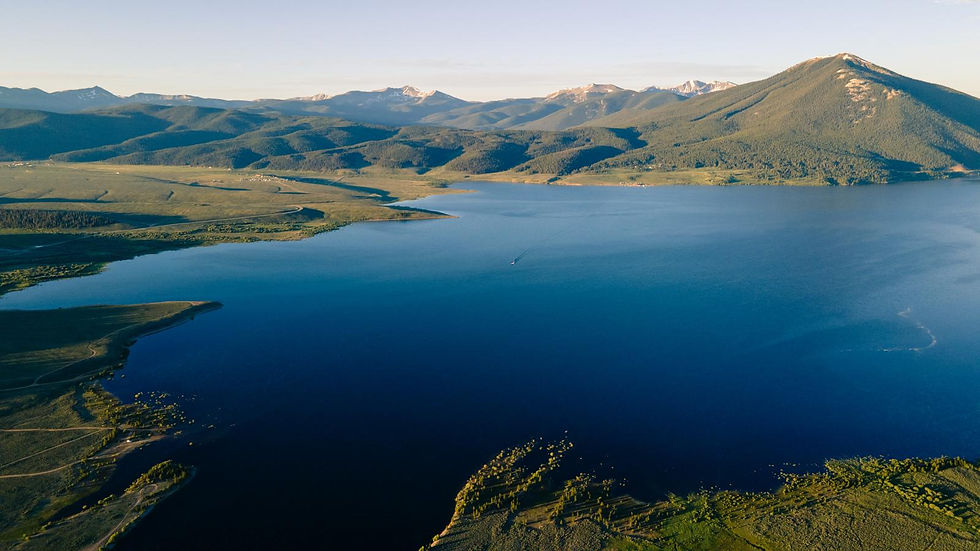
So what does the Colorado water crisis have to do with our oceans?
More than you might think. Ocean conservation doesn’t begin at the beach. For those of us living in Colorado, it can begin in the mountains. It begins with understanding our watersheds, protecting our rivers and wetlands, conserving water, and recognizing that the choices we make hundreds of miles from the coast can have consequences far downstream.
We may be landlocked, but we are not disconnected from the ocean. The mountains and the sea are part of the same water cycle. And when we protect the places where that cycle begins, we are also helping protect the ecosystems that depend on where that water ultimately goes.


Comments